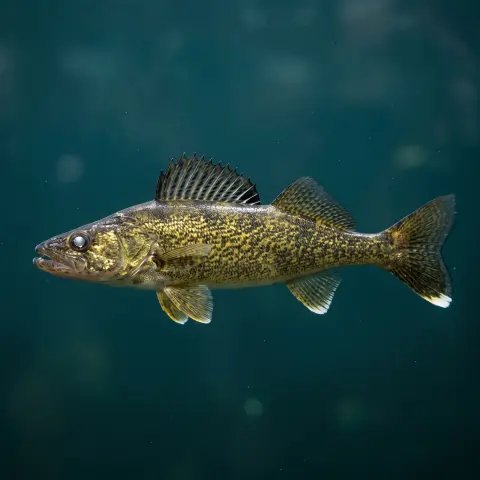
Walleye
Sander vitreus
The headline fish. Low-light feeders that haunt weed edges and rocky points. Best at dawn, dusk, and on overcast days.
Ontario · Lake Country
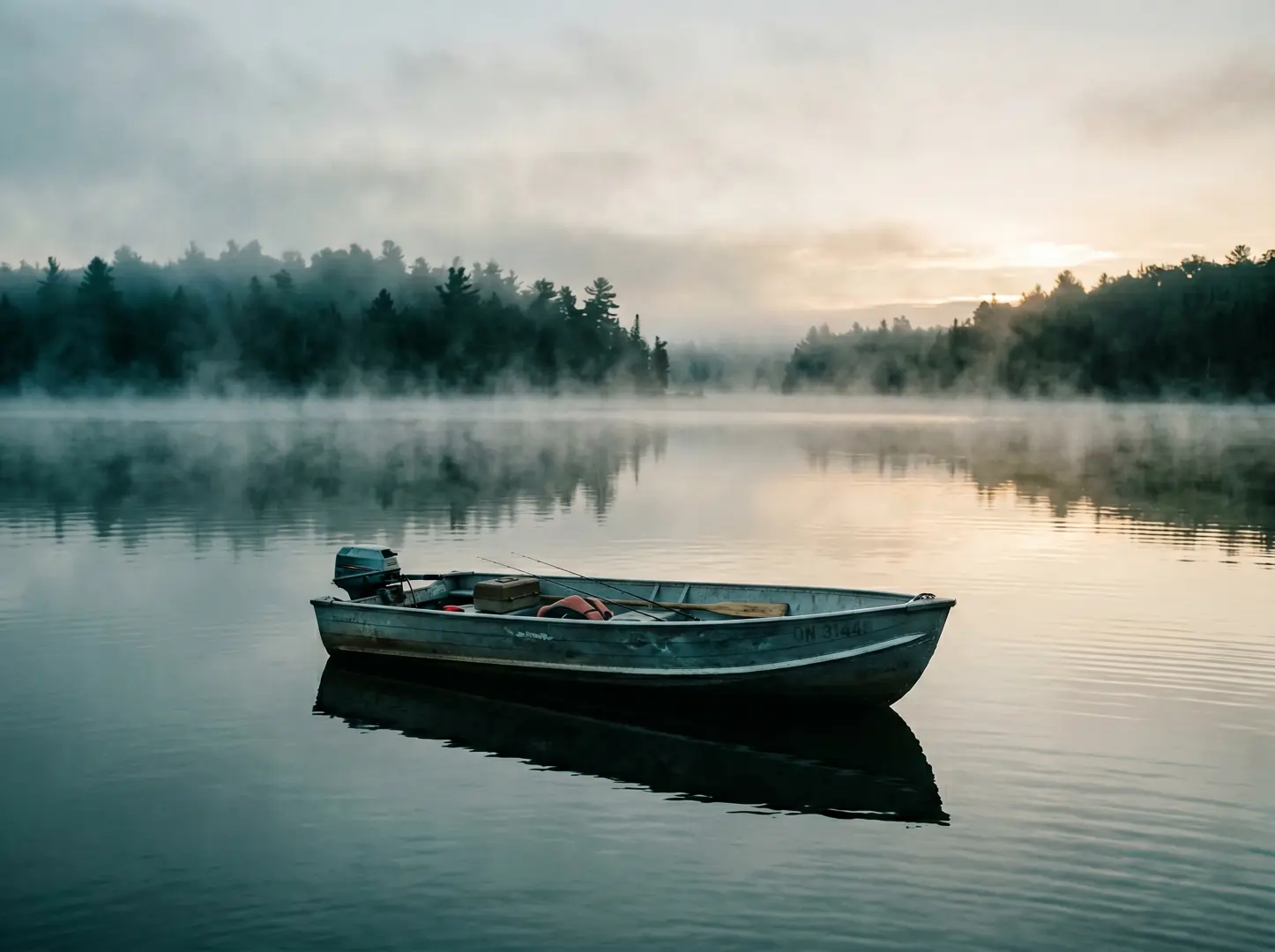
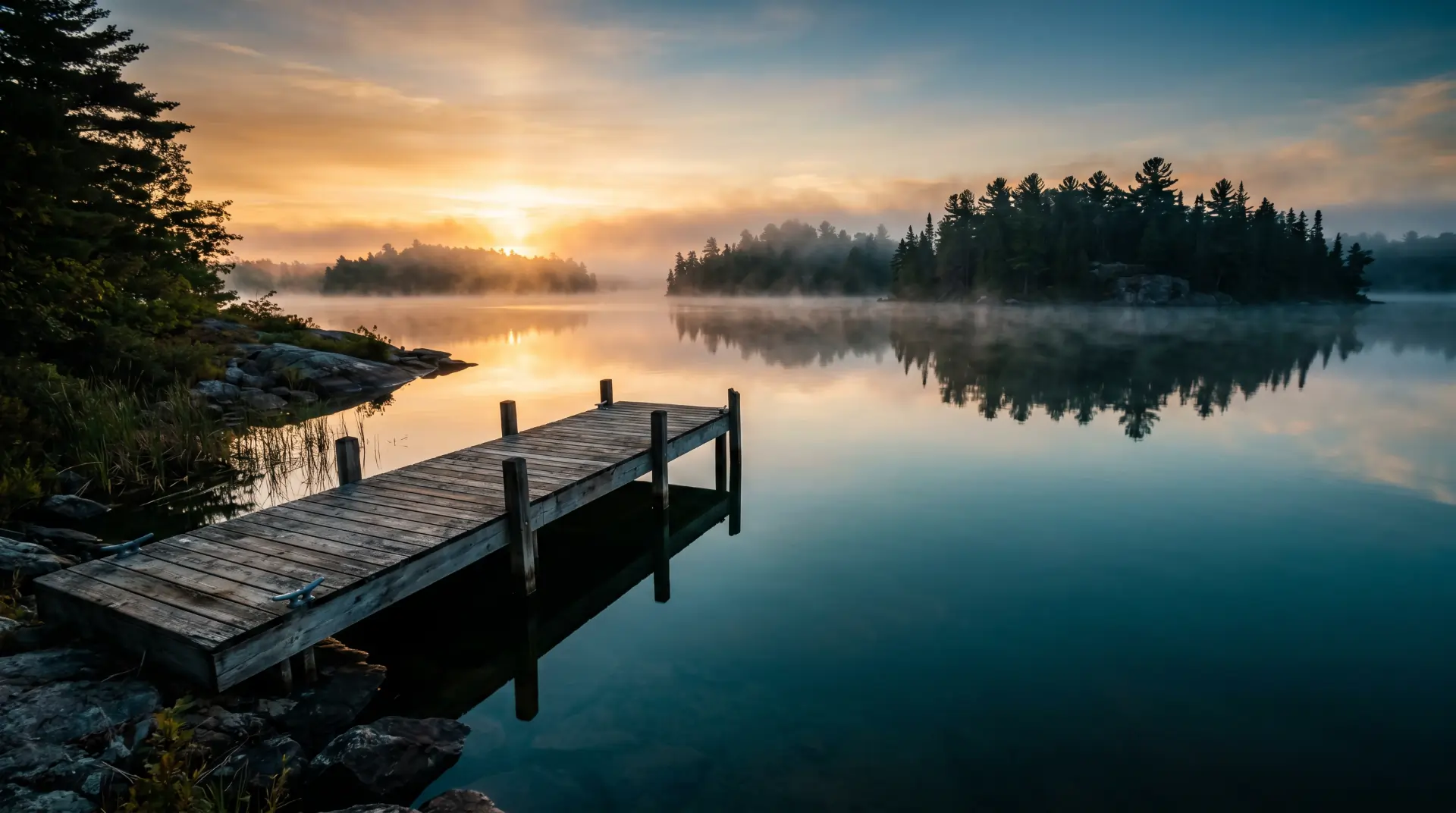
Stretching from Lake Scugog to Balsam Lake, the Kawarthas hold some of the most storied freshwater fishing in Canada — walleye at first light, smallmouth at sundown, and a muskie story for every shoreline.
Why the Kawarthas
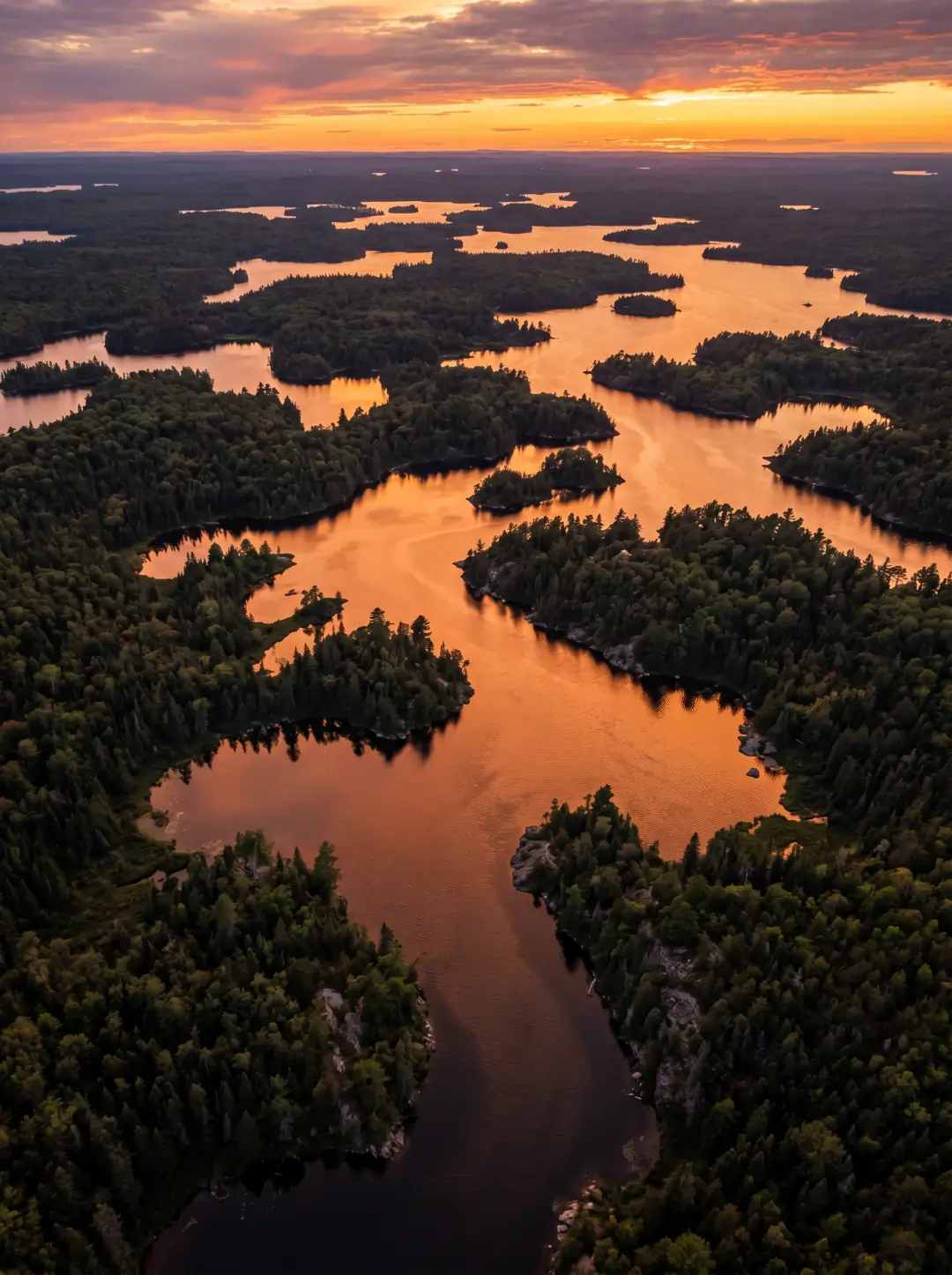
The Kawartha Lakes are a chain of interconnected lakes carved by glaciers and stitched together by the Trent–Severn Waterway. Shallow, weedy bays. Rocky shoals. Quiet back channels. It's a system designed — almost on purpose — for the fish that live here.
What you'll catch
Six species you can reasonably expect to encounter in a season — plus a handful of bonus catches like crappie, perch, and panfish.
Sander vitreus
The headline fish. Low-light feeders that haunt weed edges and rocky points. Best at dawn, dusk, and on overcast days.
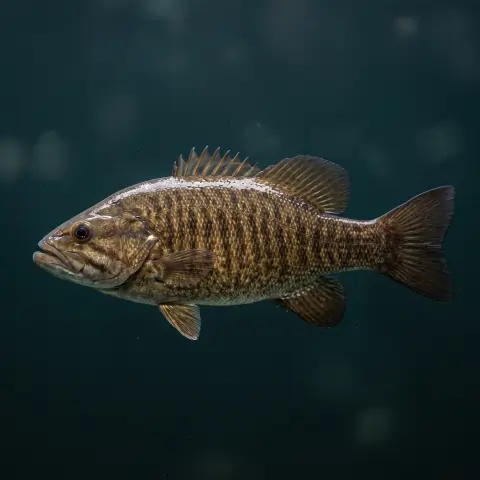
Micropterus dolomieu
Pound for pound the hardest fighter in the lake. Look for them on rocky shoals and around boulder-strewn islands.
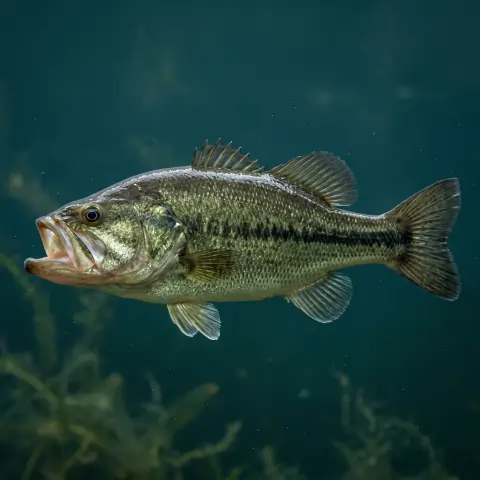
Micropterus salmoides
Ambush predators that live in the salad — lily pads, cabbage weeds, and the shaded edges of docks.
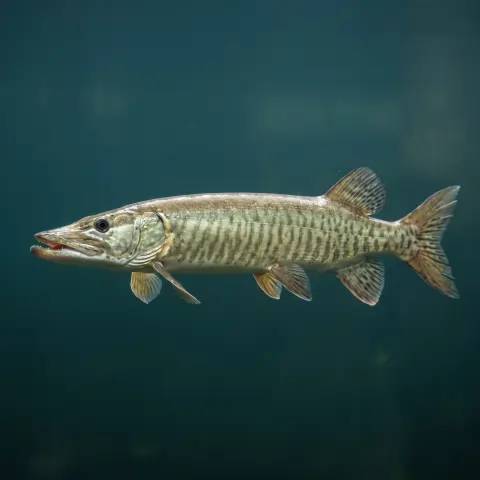
Esox masquinongy
The fish of 10,000 casts. The Kawarthas are one of the best muskie systems in the province — Pigeon and Stoney are legendary.
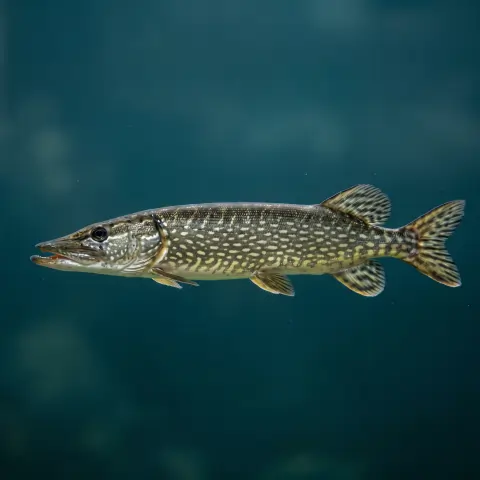
Esox lucius
Aggressive and abundant. Pike will hit nearly anything that moves through a weed-line in spring or fall.
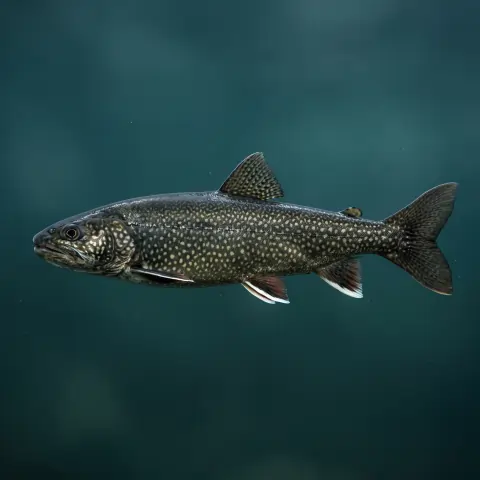
Salvelinus namaycush
Found in the deeper, colder lakes on the northern fringe of the Kawarthas — Big Cedar, Anstruther, and Stoney's deep basin.
Where to go
A starting six — chosen for accessibility, variety of species, and the kind of structure that keeps you coming back.
Muskie · Smallmouth · Lake Trout
The crown jewel. Hundreds of granite islands, deep cold-water basins, and one of the most consistent muskie fisheries in Ontario. Smallmouth on every shoal in summer.
Muskie · Walleye · Largemouth
A sprawling, weedy giant that produces big walleye in spring and trophy muskie in the fall. Bobcaygeon sits at the top of it — full marina services and easy launches.
Walleye · Bass · Pike
Stained tea-coloured water and endless weed edges. Buckhorn rewards anglers who slow down and work jigs along the cabbage. Walleye fishing turns on at dusk.
Walleye · Muskie · Crappie
Big water, big fish. The Fenelon Falls end produces walleye consistently; the south basin holds slab crappie in early spring and serious muskie in the fall.
Smallmouth · Lake Trout · Walleye
The highest lake in the Trent–Severn system and one of the cleanest. Smallmouth on the rocks, lake trout in the deep basin, and a quieter feel than its southern neighbours.
Walleye · Largemouth · Panfish
The southern anchor of the chain and a long-time walleye factory. Drift the wild-rice flats at evening and you'll understand why the lake earned its name.
When to fish
The Kawarthas fish year-round, but each season has a personality — and a pattern that pays off if you know it.
Walleye opener · Pre-spawn pike · Crappie
Cold water concentrates fish in shallow bays. The walleye opener (typically the Saturday before May 17 in zone 17) is a Kawartha tradition. Throw jigs and minnows along weed edges in 6–12 ft.
Smallmouth · Largemouth · Topwater
Bass season opens late June. Smallmouth on rocky points and deep weed edges. Largemouth tucked into the heaviest cover you can find. First and last light is everything.
Trophy muskie · Big walleye · Pike
The best time of year. Cooling water triggers heavy feeding. Muskie hunters live for October. Walleye push back to the rocks, and pike pile into shallow weed remnants.
Ice fishing · Lake trout · Perch
When the ice is safe, the Kawarthas come alive again. Perch on Pigeon and Sturgeon, lake trout on the deeper lakes to the north, and walleye in the evenings around weed humps.
From the locals
Every angler 18+ needs an Ontario Outdoors Card and a fishing licence. Buy online before you go — most lake-country gas stations sell them too.
On the Kawartha chain, the windward shore is almost always the productive one. Wind pushes plankton, baitfish follow, and predators stack up behind them.
The Trent–Severn locks at Bobcaygeon, Buckhorn, and Lakefield concentrate baitfish — and walleye love hanging in the current breaks just downstream.
Healthy green cabbage weed (Potamogeton) holds fish. Dying brown coontail and milfoil mats are usually empty. Learn the difference and your hookups will double.
If you're targeting muskie, bring 100 lb fluoro leader, a big net, jaw spreaders, and pliers. Photograph fast and release in the water. These fish are too valuable to mishandle.
Most of the Kawarthas falls in Fisheries Management Zone 17. Limits and seasons can change — read the current Ontario Fishing Regulations Summary before you launch.
Find it
Roughly bounded by Lake Scugog to the south, Balsam Lake to the west, and Stoney Lake to the east — about 90 minutes northeast of Toronto.
Plan your trip with Ontario's official tourism resources, or pick up a Trent–Severn Waterway chart before you launch.